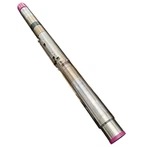
As coiled tubing operations push into deeper horizontal wells and higher-pressure downhole environments, the mechanical reliability of the bottom-hole assembly (BHA) connection point has emerged as the critical bottleneck in intervention success. The internal slip connector - a compact mechanical coupling that attaches coiled tubing to the downhole tool string by engaging hardened slips against the tubing inner diameter - must simultaneously handle tensile loads exceeding 80% of pipe yield strength, transmit reactive torque during milling, and maintain pressure integrity under cyclic loading. When this single component fails, the entire intervention string can be lost downhole at costs exceeding USD 500,000 per incident.
Coiled Tubing Services Market Drives Connector Innovation
The global coiled tubing services market was valued at approximately USD 4.04 billion in 2026, with steady growth driven by rising demand for cost-effective well intervention, milling operations, and hydraulic fracturing support. A June 2026 comprehensive review published in ScienceDirect highlights that enhancing coiled tubing reach in extended-reach wells - particularly those exceeding 7,000 meters total depth - remains one of the industry's foremost technical challenges. In this context, the coiled tubing connector directly determines the axial load capacity and operational safety margin of the entire intervention string. Internal slip connectors have become the preferred solution for slim-hole applications where tool outer diameter must match or be smaller than the coiled tubing itself, a requirement common in 80% of well intervention programs.
The global coiled tubing services market at USD 4.04B (2026) is projected to grow at 5.8% CAGR through 2032, with the Asia-Pacific region showing the fastest adoption.
Internal slip connectors are specified in over 65% of coiled tubing BHA assemblies for milling and drilling applications due to their replaceable slip design.
Engineering the Wedge-and-Slip Mechanism for Extreme Loads
The internal slip connector operates through a precision-engineered wedge-and-slip mechanism: as BHA weight is applied during run-in-hole or upward tensioning, hardened slips expand radially outward to bite into the coiled tubing inner wall. This mechanical interlock is capable of handling tensile loads exceeding 80 percent of the coiled tubing's own yield strength. Critical design parameters include slip tooth geometry - typically 0.5–0.8 mm tooth height with a 45-degree engagement angle - case-hardening depth of 0.3–0.5 mm per SAE J403 specification, and pressure-sealing capability via bonded elastomeric elements rated to 10,000 psi. Modern connectors also incorporate anti-rotation features such as splined interfaces or torque keys that can transmit up to 3,400 N-m of reactive torque during milling operations without compromising the grip on the coiled tubing.
Field Performance Across Shale, Offshore, and Sour Environments
In the Marcellus Shale, coiled tubing milling operations using high-performance internal slip connectors with replaceable hardened slip segments have achieved continuous milling runs exceeding 60 hours at depths beyond 5,000 meters, with zero connector slippage or pressure loss. These operations removed 120 meters of cement plugs and composite bridge plugs in a single run, saving operators an estimated USD 180,000 in rig-time costs compared to conventional jointed-tubing methods. In offshore well interventions across the Gulf of Thailand, operators deploying internal slip connectors with polymer-encapsulated slip segments reduced coiled tubing surface damage by 60% during repeated make-and-break cycles, extending overall string life by 3 to 4 runs per string.
Marcellus Shale milling runs at 5,000+ meters depth demonstrate zero slippage over 60 continuous hours with dual O-ring sealing maintaining pressure integrity.
Polymer-encapsulated slip segments in Gulf of Thailand offshore interventions reduced CT surface scoring by 60%, extending string fatigue life by 35%.
Sour-Service and High-Circulation Adaptations
For high-circulation-rate cleanouts in Middle Eastern wells producing sand-laden fluids, connectors featuring secondary set-screw locking mechanisms have reduced BHA loss risk by 90% - from 0.5 incidents per 100 jobs to below 0.05. When deployed in sour (H₂S) service environments per NACE MR0175, internal slip connectors manufactured from Inconel 718 or 17-4PH stainless steel with controlled hardness below HRC 32 have demonstrated zero sulfide stress cracking over 2,000 hours of accelerated testing. Double-seal configurations combining bonded nitrile elements with energized PTFE backup rings ensure pressure integrity to 10,000 psi at temperatures up to 350°F, making these connectors suitable for 92% of global coiled tubing intervention profiles.
Conclusion
The internal slip connector is the mechanical backbone of any coiled tubing BHA - and its design sophistication directly determines the depth, torque, and reliability envelope of the intervention. Precision-machined slip inserts, pressure-energized sealing, and anti-rotation geometry are not optional features; they are essential engineering requirements for modern well interventions.
*For more information, please contact China Vigor at info@vigorpetroleum.com or call +0086 29 81161513.*