Lost circulation remains one of the most expensive drilling challenges in the oil and gas industry, costing operators an estimated $800 million to $1.2 billion annually in lost drilling fluid, non-productive time, and remedial operations. When severe losses occur, traditional response requires pulling the entire bottomhole assembly to surface before pumping lost circulation material - a trip that can consume 8 to 16 hours of rig time in deep wells. The multiple activation bypass valve (MCBV) addresses this problem by enabling operators to open and close circulation ports downhole without tripping, performing up to six activation cycles per run. The global circulation sub market, encompassing multi-cycle bypass valves and related tools, is projected to grow from $415 million in 2025 to $615 million by 2033 at a CAGR of 5.1 percent.
Ball-Controlled Mechanism Enables Six Cycles Per Trip
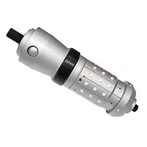
The MCBV operates through a precision ball-controlled sliding sleeve mechanism. A switch ball group - comprising one activation ball, two closing balls, and one locking ball per cycle - is dropped from surface in sequence. When the activation ball lands on the ball seat and pump pressure reaches 0.7 to 1.5 MPa, the sliding sleeve shifts downward, aligning the bypass ports with the tool body and opening the circulation pathway. Drilling fluid can then discharge directly from the tool side into the annulus at flow rates up to 1,000 GPM for 4.75-inch tools and 2,000 GPM for larger sizes, enabling high-concentration lost circulation material pumping without restrictions imposed by the bit nozzles or downhole instruments. After plugging operations, two GCr15 bearing-steel closing balls are dropped, and the pump pressure is raised to 7 to 9 MPa to shear the locking ball and reset the sliding sleeve. The system returns to full through-bore circulation with all control balls safely captured in the ball basket. Each tool kit includes six complete ball sets for six switching cycles within a single trip.
Material Upgrades Deliver 482 Degree Fahrenheit Temperature Rating
Core components of Chinese-manufactured MCBVs have undergone substantial material upgrades to extend operational envelopes into HPHT territory. The sliding sleeve is manufactured from 17-4PH stainless steel (630 grade) to resist erosion from high-velocity plugging slurries, while the bypass nozzles are fabricated from YG11C tungsten carbide for maximum wear resistance. The top sub material has been upgraded to high-strength 4330V alloy steel, improving the tool's overall mechanical properties under torque loads reaching 107.8 kN-m for 9.5-inch tools. Control balls are molded from PEEK (polyetheretherketone) engineering plastic, enabling reliable operation at sustained downhole temperatures up to 150 degrees Celsius (302 degrees Fahrenheit) without thermal degradation. The seal system between the sliding sleeve and top sub has been upgraded from standard O-rings to Y-ring configurations, drastically improving sealing stability over multiple activation cycles. Available sizes span from 4.75-inch OD (NC38 connection) to 9.5-inch OD (7 5/8 REG connection), with pressure ratings of 10,000 psi across the entire range.
Automatic Shut-Off Reduces Well Control Risk by Preventing U-Tube Effect
One of the MCBV's most valuable safety features is its automatic shut-off function: when the pump stops, the compression spring immediately resets the sliding sleeve, closing the bypass ports and preventing the U-tube effect that can cause formation influx or well-control incidents. This passive safety design is particularly valuable during connections and tripping operations, where the risk of swabbing or surging is elevated. Field data from directional and horizontal wells in the Middle East indicates that MCBV-equipped BHAs reduce total non-productive time related to lost circulation by 35 to 50 percent per section, with an average savings of $45,000 per loss event when factoring in eliminated tripping costs and reduced fluid losses. The tool also enables large-displacement well flushing in horizontal sections exceeding 8,000 feet lateral length, effectively removing cuttings beds that accumulate in low-side wellbore areas where annular velocity drops below 3 feet per second.
Multi-Cycle Bypass Technology Extends to Well Control and Cementing Applications
Beyond lost circulation management, MCBVs support casing and BOP cleaning operations by opening bypass ports to circulate cleaning fluids at rates up to 2,000 GPM while the BHA remains in the hole. During milling operations, the bypass function enables metal burrs and debris to be circulated out immediately, improving window quality and reducing sidetrack failure rates. For cementing applications, the MCBV can be opened to pump spacer and cement slurry directly into the annulus at optimized flow rates, then closed to resume drilling without tripping. The tool's compatibility with LWD, MWD, and rotary steerable systems - it can be placed anywhere in the special BHA above the directional tools - makes it a versatile platform for integrated drilling optimization. As global well inventories age and drilling targets shift toward deeper, more depleted reservoirs, the value proposition of multi-cycle bypass valves as a non-productive-time reduction tool continues to strengthen.
For more information, please contact China Vigor at info@vigorpetroleum.com or call +0086 29 81161513.